Monday, 19 June 2017

Living Letters, Winding Roads, and Glowing Windows

The lesson I have learned again and again during the course of academic study: Research can take you anywhere.  This becomes a deeper and greater truth as one moves from an undergraduate interest, fevered Masters work, to the long-sustained journey of a doctorate.

Arriving at the British Library this past week for the first time, I thought my time there would have been the adventure in itself. The gaping brick archway, the interior plaza, the clatter of locker doors and feet dashing up and down successive stairways as Academia's labourers, young and old, marched in and out of darkened reading rooms like bees in a hive. It was like a train station for any and all kind of querying researcher - the glassy, mirrored elevators even announced the 'stops' at each floor, rattling off: 'Social Sciences Reading Room, Music Room, Manuscript Library....'
And as a great heap of albums was plunked before me in the Manuscripts room, I thought for sure I would never leave! Windowless and chilled by air conditioning, the room enclosed researchers who seemed motionlessly absorbed in their own work.  As I began to comb through Burne-Jones's accounts of the weather, of complete and incomplete commissions, of dinner parties joyful and tedious, I felt that I too would be bound up in my albums - much like the other researchers, much like the letters themselves!

However, the reading of the letters brings you on an imaginative, investigative journey through the realms of another person's world, other people's times - the places and things they loved, hated, or just thought about on a regular basis.  It is a mystery, piecing together the hints and fragments of their lives through the scribbled notations of a quickly-moving, rapidly-thinking artist's hand.  And this time, the mystery led me beyond my imagination, out of the library and to the heart of the experiences many of the letters recounted. 

Later in life, Burne-Jones spent much time by the seaside, supplementing his health with the fresh salty air and designing quietly in his studio.  Writing to his young friend Mrs. Haskell, he recounts the joys and struggles of  his work, of missing grown children, of a nagging wife...of his both hopeful and sorrowful relationship with God and heaven.   He specifically addresses these topics when recounting the characters he sees regularly at his church - obsessed with the high-booted, 'very very old' Vicar who is fond of hunting - and the windows that Burne-Jones not only designed but paid for himself, dedicating them to his daughter there.  When they were put up in 1893, Burne-Jones made a point of explaining the event and describing the pieces to Haskell:

The window is up and looks bummy [can anyone tell me what that might mean in this context? haha] and glows - the grave-digger says it's the splendidest thing in Sussex.

There are 3 lights – and on the left hand is Gabriel and under him a little panel of the Annunciation and he says – but of course in Latin which is his native tongue “I am Gabriel the Archangel, the messenger of great joy."  

And in the middle light is Michael – and under him a panel of his fight with the dragon – and he says I am Michael the Archangel, captain of the hosts of heaven."  

And then comes Raphael (not the painter) and he has a little picture under his of a guardian Angel leading Angela [Thirkel - his granddaughter] through the streets of London and he says – “I am Raphael, keeper of the Lord’s little ones."

And I daren’t ask how much it will cost to make – it’s the only way if you want anything, not to ask how much – and there it is – it’s a thankful offering for Margaret and it said in Latin in a very narrow band.

And it glows and glows the window does.

I was exuberant!  This was very exciting to find for my research, as often Burne-Jones's involvement in church and religious life is questioned - this sustained conversation about religious life and its significance for his personal and artistic goings-on go far to deepen our understanding of the role of his faith in his life and art (complex as his faith - or any one else's for that matter - is).  

A 'double-check' on the letters' addresses and letter-headings revealed he was writing from Rottingdean, where he had his home at the 'North End House' across the street from the church of St. Margaret of Antioch.  This required a bit more digging - an investigation not to be undertaken in the cool shadowed spaces of the British Library but out onto the roads, into the sunshine and to the (never-before-seen) English seaside! 

So as they say in the movies: "ROAD TRIP!!!!!!!!!" 

A two hour drive to the swelling hillsides of Sussex brought me not only to the windows, but the very town Burne-Jones talked of walking through - the seaside air he breathed - the house he lived in and wrote from -  the church with the 'very' old vicar and the windows he took such pains and care and love to dedicate to his daughter.  They were just as the gravedigger described, just as he himself said: 'the splendidest thing in Sussex'; all 'bummy' and glowing!  That day, the letters came to life! 


St. Margaret of Antioch's


The glowing 'bummy' windows
Burne-Jones's home right across the town square.

And just down the street - the beach!

Some shots of the beautiful blue-sky town. 


The memorial to Edward Burne-Jones and wife Georgiana at the church. 


Friday, 9 June 2017

Sous le ciel de Paris

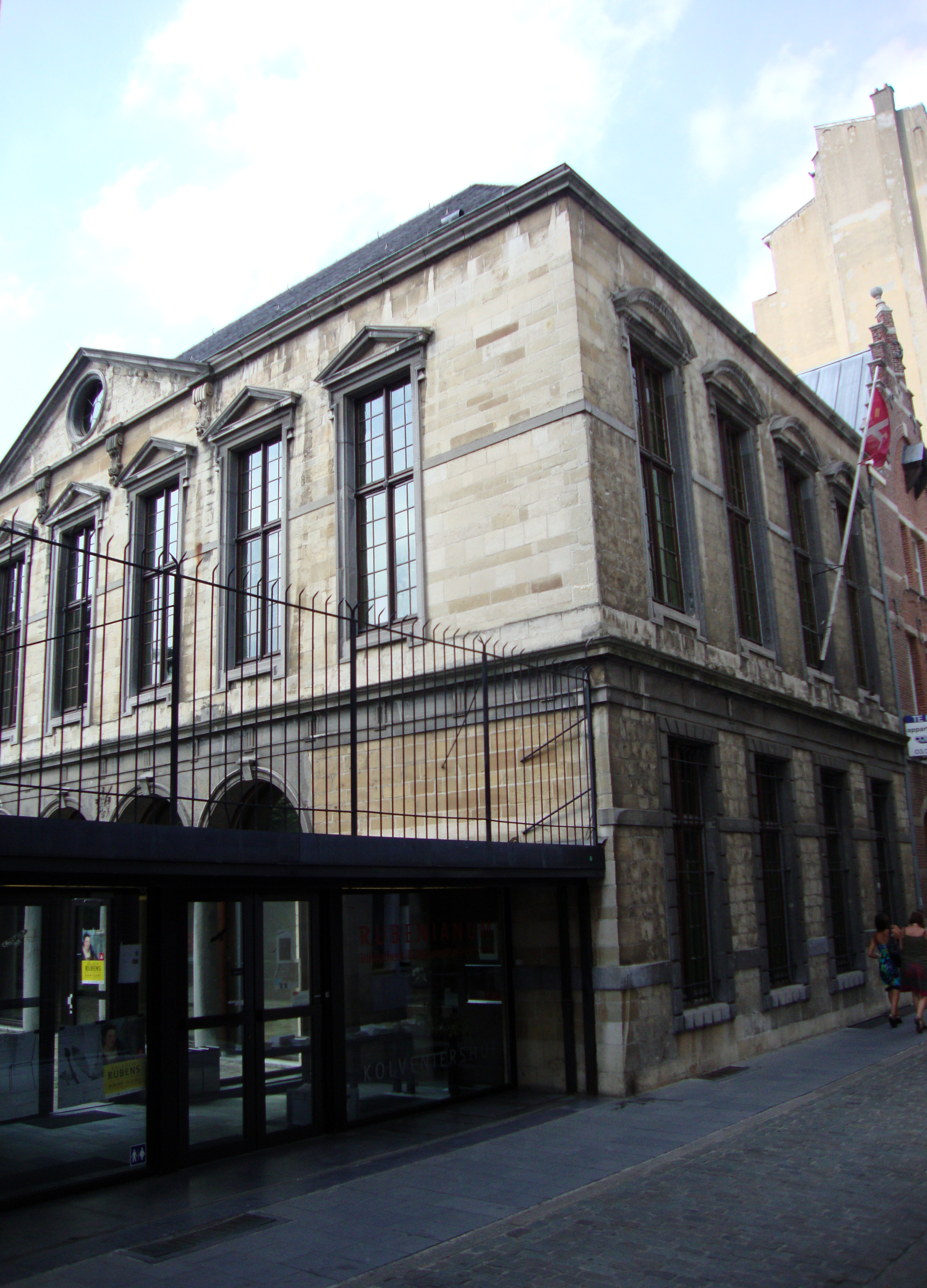
It's the beginning of June and I'm in Europe for two months of bibliographically-induced merriment. The city of Antwerp boasts perhaps the world's only research institute dedicated to one artist, the Centrum Rubenianum. Tucked away behind the Rubens House off the Meir, its extensive library and archives harbour everything you always wanted to know about Dutch and Flemish art (but were afraid to ask). A lively scholarly community is active there, from museum curators to numerous North American PhD fellows from Princeton, Brown and Bryn Mawr.


I will peruse several city archives, not least in my church, and indulge in frites with plenty of mayonnaise, hopefully without precipitating a cardiac arrest.


This weekend however, I am off to Paris to visit the Musée du Louvre's Département des Arts Graphiques, which holds Rubens' portrait sketch of his confessor (probably). Ophovius' tomb monument graces my church.


After wining and dining on the boulevards of gay Paris, and attending an opera performance at Versailles, naturellement, I will return to the banks of the Scheldt to give a presentation at the Rubenianum.


Then, off to Amsterdam to visit their offsite depot in Lelystad. Oh, the glamour!

Wednesday, 7 June 2017

A busy couple of weeks in the life of a History of Art PhD student…

It’s been a bit of a mad couple of weeks for me, as I’ve been attending conferences and workshops left, right and centre and getting my submissions sorted for approaching deadlines.

As the summer term draws to a close, us first-year PhD students have some pretty major deadlines to meet. We’re all in the midst of our final Thesis Advisory Panel meetings for the year and generating our material to submit for progression to the second year. On top of this, I’ve been putting together funding applications for another research trip to Florence. With all this going on, it would be so easy to get bogged down in paperwork and panic…. But thankfully, there is plenty going on to help us through this potentially stressful time.

Perhaps one of the best things about being a PhD student is being able to get to conferences and workshops and network with like-minded scholars. I’ve been privileged over the last two weeks to attend several such events that were not only useful and fascinating in their own right but have also helped me to clarify some of my approaches to my own research.

The first of these was a lecture by Justin Underhill from Berkeley about on ‘What Turns Pictures On.’ This was part of a wider departmental event, the York Summer Theory Institute that, by all accounts, was a great success. Underhill uses technology in amazing and innovative ways to recreate the settings within which works of art were experienced in the past, and is even branching out into the creation of soundscapes. With my research centring on trying to access the world of the early modern Italian domestic interior, this was hugely thought provoking and really brought home the potential for extending such a project beyond the scope of my thesis.

The end of last week featured a WRoCAH –sponsored conference in Sheffield on ‘Habitual Behaviour in the Early Modern World.’ Wonderfully organised by three PhD students from the Universities of Leeds, Sheffield and York, the conference spanned two days and featured a whole host of brilliant papers, including keynotes from Sasha Handley (The University of Manchester) and Steven Shapin (Harvard University), all of which were frankly inspiring. Even those far outside my remit, including papers on gambling in seventeenth-century Dutch comedy and the tobacco market in early modern England, were really entertaining.

Finally, on Monday of this week I attended a workshop here at the University of York on architectural drawings and models. It was great to get the chance to have a think about the implications of the planning process on the eventual outcome buildings and to hear a paper on my very own Palazzo Strozzi from the wonderful Amanda Lillie (The University of York). This was followed by a research seminar led by Mauro Mussolin (Metropolitan Museum of Art) on ‘Michelangelo and Paper as Palimpsest,’ where he explored the potential for exploring use and re-use of paper in the work of this most famous of artists, digging through layers of drawing and writing and piecing together paper fragments in an almost archaeological way. Fantastic!


I think it’s safe to say that I am currently feeling well and truly edified. My mind is full of interesting and exciting new ideas that I can’t wait to start bringing to my research and I’m looking forward to continuing conversation with all the amazing people I’ve met over the course of this whirlwind couple of weeks. Maybe things will calm down a bit now….. Oh no wait…. York Festival of Ideas starts this week….

Tuesday, 4 April 2017

Annual HoA PhD conference 2017

A few words about our exciting PhD conference organised for the end of last term.

The programme featured nearly twenty papers, each about 10 minutes long, from all manner of subjects: lilies in Pre-Raphaelite paintings of the Virgin, the repression of Czechoslovakian Art Nouveau under Soviet communism, pro-AIDS protest art and home-spun Polaroid pornography. Who said conferences are boring?

Each of us bloggers presented a paper while Hannah chaired a session. Although expecting a few duds, the conference proved consistently engaging - even when the subject was entirely off my radar.

In true art-historical fashion, several wine bottles were uncorked and duly emptied for recycling when it was all over.

Such events are excellent practice for professional contexts, as well as being an exercise on putting words to paper at this early stage.

Saturday, 11 March 2017

Anglici iubilant

As our dear Shakespeare reminds us, "the man that hath no music in himself, nor is not mov'd with concord of sweet sounds, is fit for treasons, stratagems and spoils." Hoping indeed to be moved by music and thus to avoid such a destiny - which would surely interfere with my doctorate - I have been enjoying York's rich musical culture since I arrived here in September. This has included singing in the Schola at St Wilfrid's church and in the University Choir, as well as attending some captivating performances.  

Last Wednesday night is an example of such a performance. I attended a concert of The 24, a chamber choir directed by Robert Hollingworth (the Emeritus director being Prof William Brooks) and formed of one score and four talented university students. For those accompanied pieces, Benjamin Morris was on the organ. The mellifluous treat took place in the Sir Jack Lyons Concert Hall, as pictured below.


The concert's name refers to a quotation from a pre-Reformation treastice on national singing styles: “Galli cantant, Italiae capriant, Germani ululant, Anglici jubilant”, which can be roughly translated as “The French sing, the Italians quaver (bleat like goats?), the Germans howl, and the English rejoice”. And rejoicing did this music inspire! With pieces from the fifteenth to the twentieth century, the repertoire brought together glorious polyphonic works from sixteenth-century England with more modern settings of really rather ancient texts. Tallis's Gaude gloriosa, a 17-minute antiphon to the Virgin Mary, and Taverner's Gloria from the Missa Corona spinea, recreated in its long vocal lines and intricate rhythms the Gothic churches and cathedrals in which they were written to be performed. Vaughan Williams's A Vision of Aeroplanes is a text from Ezekiel's vision in the Old Testament and its frantic accompaniment and frankly mad harmony was fantastically offset amid the other works. A particular highlight was contemporary composer Sean Rourke's setting of a text written by the Venerable Bede on his death bed, which was utterly magnificent in its delicacy.

'In Choirs and Places Where They Sing': The English Church

Beyond the ancient gates of York and out into the hillsides of the North, the hills are greening with the first hints of spring.  Bells chime the muted songs of old; distant spires soar over sleepy towns blearily blinking back the rare sunny ray.  Snow bells frost the grave-tops and daffodils sprout gold - one here; one there; another bundle-full braving the cool shade of a wise oak.

Recently, my research into the art and theology Pre-Raphaelite Edward Burne-Jones has led me into a vast and dynamically complex history of the English Church - particularly, that of the architectural Gothic revival.  More and more I am taken to them; in my readings and, with the growth of pregnant spring, actually physically inside them!   There are churches everywhere here in England: an incredible church with portions dating from as far back as the ninth century is tucked on a square in the quiet village of Kirk Hammerton, a secret treasure box where paintings and stained glass windows pulsate in the slow, steady rhythms of inconceivably deep timelessness.  These monuments of faith, withstanding the physical and political abuse of ages past, are a considerable and oft-forgotten presence in the complex tapestry of English history nowadays; like the crumbling pillars of Athens, their towers might seem a testament to a distant, almost mythological, way of belief, of life, that might be hard to relate to today in the highly secularised discourse of politics and Academia.


As the daffodils bloom and pass on the graves; as the bells chime over their villages in a call to bells over other hillsides, over other villages; as homilies, weddings, funerals are given week after week after passing year, decade, century, I am moved by how profoundly they embody the human experience - its complications, its mysteries, and its soul-penetrating desire for spiritual understanding that our generation might flinch from or even seek to deny in today's rationalistic, Post-Enlightenment, 'Theory of Everything' and 'I-can-Google-it' mentality.

The Victorians were our precedents in this attitude.  The industrial revolution prioritised knowledge, efficiency, simplicity, and production over the 'mysteries' of faith, of love, of life.  Simply put, this led to an identity crisis, and in response, many people sought solutions in many different ways.  One of those ways to return to the days of old, represented architecturally and theologically by churches like the one at Kirk Hammerton.  So with the boom of industry, came the boom of religious controversy, came the boom of church renovation and construction.

Burne-Jones designed a (literally, not exaggerating) endless number of stained glass windows and tapestries for these churches that were being built and revived during the nineteenth century.  Many of these were in the Gothic style, reflecting the desire of the Christians in England to turn away from the brutal industry of their new world and instead return to a perceptively 'truer' form of faith founded in the past.  Ultimately, Burne-Jones participated in this movement, not simply as an artist supplying this public demand, but as someone who had initially had studied theology - and not art - in his youth with the original desire to become a minister of the High Church 'Tractarian' variety most often controversially associated with the ritualistic 'Romanism' of the Catholic Church.  For him, art became a particular and pertinent form of religious ministry in that it related to the distinct experience of worship that the mentors of his youth sought and encouraged in the theological, liturgical and physical atmosphere of the Gothic Church.  Burne-Jones later would profess his preference for public, religious works, declaring ‘I want big things to do and vast spaces, and for common people to see them and say Oh! – only Oh!'  He further lamented that ‘the chance of doing public work seldom comes to me, if I could I would work only in public buildings and in choirs and places where they sing.’

It is therefore necessary for my research not simply to consult the sketchbooks where he actually contemplated the compositional layouts of the designs, but to see those designs 'in action,' as it were, in the churches they were designed for.   Among the first churches I visited was rather a surprise, and although it did not possess any Burne-Jones designs, the specifically 'Tractarian' architecture of Hoar Cross Church put into direct practice many of the texts that Burne-Jones (and I) had read in the course of his intense theological study, first in Birmingham in his adolescence and then at the University of Oxford.

HOAR CROSS was built in the 19th century, commissioned by a widow who had just lost her husband.  She came from a very 'Tractarian' High Church background, and the church, as a highly personal creation, reflects these very particular set of beliefs.


Latin engravings covered both exterior and interior surfaces. This is a particularly pertinent reminder for High Anglican worshippers who revered the Latin words spoken in the rituals of the liturgy. 

The patroness saw examples of a series of wooden 'Stations of the Cross' during her travels in Northern Europe. She immediately commissioned the artists to make some for her own church.  All of them were gold-gilded and shining in the relative darkness of the desolate aisle where lower laymen would have worshipped. 

Classic Gothic arches, a golden cross, and a highly ornate, traditionally medieval screen very much in line with the decadence of Tractarian worship. 

Gilded, highly decorative Thuribles: These carry the incense to be used during the rituals of the Mass. 

The wall behind the altar.  This space, and the entirety of the church,was filled with an abundance of sculpted saints, popes and Biblical figures. 

The tomb of the patroness's husband, to whom she had wanted to build the church for in memoriam.  She originally had controversially wanted to place him directly in front of the altar, a space reserved for saints and relics.  The Church persuaded her to move it off to the side in this position. 


ST. COLUMBA'S was an ancient church restored in the nineteenth century by architect William Butterfield, associated with the High Church 'Ecclesiastical Society' for architecture in Cambridge. Here we get the first of our Burne-Jones stained glass: an Annunciation window that was itself one of his first designs in stained glass.

The interior exemplifies the English country church of this period: stripped, white washed and bare following the Protestant Reformation.  Nevertheless, Butterfield would have been hired to restore and exemplify the Gothic arches seen here that evidence that much-revered Gothic past the Tractarians sought in their rituals and environs of worship. 


Burne-Jones's early Annunciation window on the furthest left. The design, featuring the Virgin cradling the dove of the Holy Spirit, was considered controversially 'sacrilegious' by architect William Butterfield, who thereafter refused to hire Burne-Jones (This window and the controversy surrounding it - Burne-Jones considered it an 'innovation' himself - is the subject of the chapter I am currently researching).


NUN MONKTON contrasts St. Columba's in its intense emphasis on decadent detail.  Much like Hoar Cross, Nun Monkton reflects the interests of the patrons, who commissioned the restoration of this church in light of the fact that it had once been home to a sisterhood of nuns.  It's ancient Romanesque detail maintained on exterior (see the arch below) and interior of the church, Nun Monkton gives one the impression of a large and fabulous cathedral when it is actually about the same size as the churches above.  Here also are some wonderful examples of Burne-Jones window, dating from the mid-point in his career when he was the chief designer for Morris & Co.


The Burne-Jones window, featuring an extraordinary foliage Morris design that beautifully ties together Burne-Jones's scenes from the life of Mary and angel-musician figures.  These designs are in tune with the legacy of the church as a home to a sisterhood of nuns; rather than being 'sacrilegious,' Burne-Jones's focus on Mary at significantly intimate points of her life was extraordinarily pertinent for the patrons here.' 


St. Anne and the Virgin Reading; The Annunciation; and Virgin and Child were all positioned in a register below the central Nativity scene. 

Though not designed by Burne-Jones, this window gave me my new 'motto': TAKE THY PEN AND WRITE QUICKLY! 

These Churches, dynamic and different as they are, thus become an integral primary source of an essential primary experience of a history and a faith still living today.  They represent not only the ageless human desire for a relationship with eternity, but a specific way of life endlessly and inseparably informed by that desire.  To see them as such, as Burne-Jones and many of his Victorian peers did, is to start to recognise the central mysteries of our own existence we may try to forget in our attempts to make life, on academic and personal levels, easier... 

At Kirk Hammerton (Photo courtesy Simon Crouch)


I will be presenting a bit of my research on theological frameworks in Burne-Jones's work at the History of Art's PhD Conference on Framing, 17 March in the Berrick Saul Treehouse.  Please do come along!


Tuesday, 7 March 2017

Research bite: Caravaggio’s Madonna of the Rosary

Here follows a taster of my PhD research, looking at Caravaggio’s Madonna of the Rosary and its acquisition by the Dominican Church in Antwerp (today the Sint-Pauluskerk).


The altarpiece, today in the Kunsthistorisches Museum in Vienna, was painted in Rome c.1601, just as Caravaggio exploded on the city’s religious art scene with the Contarelli Chapel altarpieces, most spectacularly the Martyrdom of St Matthew (San Luigi dei Francesi). It was put up for sale in 1607, brought to Naples probably by Caravaggio himself when on the run. It was offered by two Caravaggesque artists, Louis Finson and Abraham Vinck, to the Duke of Mantua via his court portraitist, Frans Pourbus. Its high price (400 ducats) was probably what deterred its purchase by Vincenzo I Gonzaga.

It next appears in Amsterdam, bequeathed in full to Vinck by the dying Finson. The Rosary Madonna is then purchased before Vinck’s death in 1619 by Peter Paul Rubens and a consortium of artists and “liefhebbers” – amatori. A painting by Pieter Neefs has it displayed amidst a painting cycle depicting the 15 Mysteries of the Rosary. Its function is nominally devotional, yet more apparently secular, like a masterpiece shown off in a princely kunstkammer.


Its price, 1800 gulden, is extraordinarily high, vastly outvaluing the iconic Death of the Virgin today in the Louvre (purchased by the Duke of Mantua on Rubens’ recommendation). Like the ideal home of Richard Hamilton’s pop collage, what made the Rosary Madonna so different, so appealing?

Its large scale and high finish put it at a premium among Caravaggio’s works for sale. Its many figures are choreographed within a clear pyramidal hierarchy of intercession, from Virgin and Child at the apex to saints and prostrate pilgrims below. The theology expressed is entirely orthodox, the composition conservative – as a didactic tool, it fits in nicely with any “Counter-Reformation” decorative scheme, crystallising devotion to the rosary, a cult intensified in the Battle of Lepanto’s victorious wake.

My argument is, this altarpiece was purchased not as mere ecclesiastical furniture or even an “icon”, but as a Caravaggio, described as ‘outstandingly great art’ and a ‘rare piece’. Caravaggio’s brand equity was at a premium in the early years of the seventeenth century, before being cast out as an anathema by later Italian critics, most prominently Bellori. Above all I am interested in this altarpiece’s value as a commodity, accumulating as it changed hands from Caravaggio to Finson, by association with Vincenzo I Gonzaga, Rubens and the European aristocracy, including Marie de’ Medici. My critical apparatus is constructed from economic and sociological theory, beginning with Karl Marx and Adam Smith.


On Friday 17 March 2017, I will present my research at the York HoA PhD conference. Be there, or be square!